From the bus stations of Rt. 66 to the smoky, neon-tinged jazz dives of the big cities, these wanton tales of longing introduce us to vixens on the fringe and those shifty men that drove them there.
Read the pulp novella that one reviewer called 'A potboiler in the style of old school writers like Mickey Spillane, Dashiell Hammett or Raymond Chandler...'
...Cyrus Garza, as played by Emmy winner Jimmy Smits. As 'Upfronts' week continues from networks and announce what they have in store for us on the boob tube next year, I think think I'm instantly stoked for the hour-loung drama "Outlaw."
We here at Bukowski's Basement love hard-drinkin', gamblin' and womaninzin' protagonists and Smits may have found his best role yet... Like I said, maybe the next Denny Crane.
Here's the official scoop from the Peacock network:
Cyrus Garza (Smits) is a U.S. Supreme Court justice who abruptly quits the high-level position. A playboy and a gambler, Garza had always adhered to a strict interpretation of the law until he realized the system he believed in was flawed. Now that he's quit the bench and returned to private practice, he's determined to represent "the little guy" and use his inside knowledge of the justice system to take on today's biggest legal cases - and he's making plenty of powerful people unhappy along the way. Jesse Bradford ("The West Wing"), Carly Pope ("24"), Ellen Woglom ("Californication") and David Ramsey ("Dexter") also star. "Outlaw" is a Universal Media Studios production along with Conaco productions. Eisendrath is executive producer along with Terry George ("Hotel Rwanda," "Reservation Road"), Conan O'Brien, Jeff Ross and David Kissinger ("Andy Barker, P.I."). "Outlaw" is written by Eisendrath and directed by George.
Check out the entertaining trailer (and pretty funny stuff at 3:05)...
Sometimes a story is all about context. Well that, and good editing. In the case of a TV show or movie, the way it's spliced together with music is also just as important.
Take this new film "George" about an average middle-aged man who seems to have it all. He just got engaged to the girl of his dreams and it's right then and there, the plot thickens.
Tragedy strikes.
His finance suddenly dies and George is pulled into a massive depression. He can't sleep, eat or do anything. He needs an epiphany and it's right around the corner. That epiphany is named Joey and it's the little boy he's about to adopt. It opens up his world.
While the film is just the kind of thing you would see in theaters circa late'90s, it's not what you might expect. It also doesn't star Kevin Spacey or Sean Penn or any of the other A-listers that you might find in this schlockfest.
Am I serious or is this a joke? Click after the jump to see what exactly this new film is . You won't be sorry...
Why? Because they all died on May 16. For me, however, Sammy will always have a special place in my heart and will resonate the most. As a child, one of the first songs I remember hearing was Sammy's "Candy Man." Granted, the addicting tune can be somewhat annoying but let's face it, to a little kid, a song about candy was the friggin' bomb...
I had older parents and the New York radio station WNEW-AM was always on in the house. Back in the '70s and '80s, the station was best known for its "Milkman's Matinee" and their "Make Believe Ballroom" standards which included everything from Benny Goodman and Sinatra to Sammy and Nat King Cole. Great stuff. That music was in my consciousness from when I was in grade school and I don't regret it for a second.
In 1987 when Sinatra, Sammy and Dino embarked on their Rat Pack Reunion tour, I was lucky enough to have a chick who, like me, also enjoyed that era's music. We snagged tickets for Radio City Music Hall in March of '88 and in the last frikkin' row, there we were seeing them: Frank Sinatra (who I would see several more times) and Sammy Davis, Jr. Dean Martin had backed out by then and would eventually be replaced by Liza Minnelli.
I saw Sammy again, however, later that year but it wasn't in concert. In September, the same gal encouraged me to volunteer with her to work on Jerry Lewis' Muscular Dystrophy Telethon on Labor Day. I'm sure I scoffed. But then she told me: Sammy would be emceeing the New York part of the show which really shot in Secaucus, New Jersey. That's all I had to hear. I prepped my wool double-breasted blazer and I was in.
Now this is where it gets fuzzy. I don't remember much from that day. I remember being there at WWOR backstage but truth be told, I don't remember working much, if at all.
I do remember seeing Sammy, however. And man, was he little. I was in college and a little guy at that and I remember Sammy being smaller than me. I also remember my chick telling me to go up to him but I punked out. It was Sammy... What would I say to him? I mean, he was like, three feet from me. What a mistake.
I'll never forget the next day. Many of the audience members were probably taken with Sammy's gaunt appearance on the telecast and the cat, by that point, was let out of the bag. That morning, I remember seeing the front page of The New York Post that read:
Sammy Has Cancer
A blow to the gut. My hero was sick and I never said hi. Nor would I ever...
Davis died in Beverly Hills, California on May 16, 1990, of complications from throat cancer. Earlier, when he was told he could be saved by surgery, Davis replied he would rather keep his voice than have a part of his throat removed; the result of that decision seemed to cost him his life.
This is my favorite Sammy tune by far...
A few things about "Mr. Bojangles" that some may not know. For me, it has to be one of the most powerful songs with the most poignant lyrics I've ever heard. Listen and you'll see why.
The popular country folk Song was written and recorded by country music artist Jerry Jeff Walker in 1968 and covered by many varied artists including Harry Chapin, Nitty Gritty Dirt Band, Whitney Houston, Billy Joel, Bob Dylan, Elton John, Jim Croce and Frank Sinatra. Sammy's rendition is most poignant. He always said the song was a rough for him to perform because, in essence, he could have become Bojangles at any time.
The ditty was inspired by an encounter with a street performer in the New Orleans First Precinct jail and does not refer to the famous stage and movie dancer Bill "Bojangles" Robinson.
According to songwriter Walker, a murder on the 4th of July weekend in 1965 precipitated the arrest of all the street people in the area. In the crowded cell, a disheveled homeless old man began to talk to Walker, who had been arrested earlier for drunkenness. The man told various stories of his life, but the tone darkened after 'Mr Bojangles' recalled his dog who'd been run over. Someone then asked for something to lighten the mood, and the man obliged with a tap dance. Wow...
I've always maintained (and you can tell at around at around time 1:26), that Michael Jackson was undoubtedly inspired by Sammy's performance of this song. The hat. The fluid movements. Watch and you'll see.
So why did I love Sammy so much and even have a denim jacket with Sammy airbrushed on the back (!!)? He did it all. A child performer/hoofer; a teenage crooner; perfected his talents in the Will Mastin Trio as a young adult before going into the army (where he was confronted by strong racial prejudice); endured an awful car crash in 1954 that took his eye; became a charter member of Sinatra's Rat Pack; married white actress May Britt to the disdain of a racially-divided nation; famously supported Republican President Richard M. Nixon and endured lung cancer. What more he danced his booty off, did awesome impressions, churned out tune after swingin' tune. And sang 'em right up until the day he got sick.
Blacksmith James Warren Sears reached for his newspaper. It was the only thing he looked forward to all day.
He read of the The Pacific Railroad Act of 1862. It would aid in the construction of a continental railroad and telegraph line. It said that Lincoln and his Union promised it would span from the Missouri river all the way to the Pacific ocean. They claim it would change the country.
The blacksmith scoffed and went back to reading about the war. Roughly 23 years later, his son Richard Warren would find himself at a crossroads and the blacksmith wanted to make sure that his son took advantage of what Lincoln had once promised the nation.
"You need to wear a suit, son," the blacksmith told his boy. "I've got soot under my nails from before you were born."
So the only logical prospect in Redwood Falls, Minnesota came in the form of the Minneapolis and St. Louis Railway. The day before he started, the young man had trouble finding a suit that fit him at the general store. He was of average build and most of the town's average men bought them all up. So he wore his father's pathetic baggy suit the day he started as a station agent.
Young Richard loved to listen to passengers, who were thankful that the horrid tribulations of stagecoach convoys were no longer a reality. What once took seven weeks now took seven days. Travel had become elegant with tea cars and whiskey bars boasting plush leather seating.
But every now and then Richard found himself a bit bored and one day, happened upon a small box of gold pocket watches on the train. Unwanted by a local retailer, Richard struck a deal with him. He had plans for the watches.
At the station, Richard prided himself on being practically the fastest telegraph reader and transmitter on the nation's grid. Using that code called morse, Richard offered the watches to other station agents on the line who needed precise timepieces because of the newly applied time zones throughout the country.
Richard also marketed his wares to local farmers who also needed to keep proper time as a result the new zones. What's more, the elegant timepieces were also a mark of the new American urban sophisticate and other station agents bought them from Richard to sell to their passengers.
Six months later, Richard made $5000 and started his own watch company, placing several ads in farming almanacs and newspapers. He would urge the homespun folk to purchase by mail because if anyone could utilize the railroad for shipping, it was Richard. By 1887, Richard would move his operation to Chicago and hired his first employee - Alvah Curtis Roebuck. Ten years later, their Sears catalog offered much more than watches and was sent to over 300,000 homes.
The 500-page tome offered up everything from plows to bikes to athletic equipment and he owed it all to the blacksmith and the railroad.
Looking at his catalog, he was finally satisfied. He sold it all with great service and speed.
And why not, he thought, somewhere a young man needs a suit that fits.
Hopefully, many 'Basement' dwellers know all about "American Masters." If you don't, hop on board and start watching the PBS series and put it in your Netflix que.
The groundbreaking show produces biographies on American artists, actors and writers that have left a profound impact on the nation's popular culture. It is produced by WNET in New York City and debuted in 1983.
Such writers from Truman Capote to Papa Hemingway to Rod Serling to Willa Cather have been spotlighted.
And tonight (sorry for the short notice), "When You're Strange: A Film About The Doors" premieres. The flick opened last month in selected theaters in New York and Los Angeles and I've been waiting to see it ever since.
The creative chemistry of drummer John Densmore, guitarist Robby Krieger, keyboardist Ray Manzarek and singer Jim Morrison made The Doors one of America’s most iconic and influential, theatrical and mysterious and sometime frightening rock bands.
Written and directed by American film director, screenwriter and cinematographer Tom DiCillo, and Doors keyboardist Ray Manzarek has stated, "This will be the true story of the Doors," and that the film will be "the anti-Oliver Stone," obviously referring to the 1991 Doors film which drew quite a bit of criticism from many fans for certain departures from the truth in Stone's screenplay.
Narrated by Johnny Depp, it tells their story using only original footage – much of it previously unseen – shot between their formation in 1965 and Morrison’s death in 1971. “From the outset I decided to use only original footage of this astonishing band,” said Tom DiCillo, director and writer of When You’re Strange in a press release.
"When You're Strange" was first screened at the Sundance Film Festival on January 17, 2009. If you can't find the "American Masters" film on your local PBS station, look for it on DVD on June 29
While today it's recognized as a pre-Beats classic of American literature, it may not have been so if it had not been for Bukowski.
As a struggling young writer trolling the streets of Los Angeles, (just like 'Dust' protagonist Arturo Bandini), Bukowski had stumbled upon a copy of the book in the public library. Fante immediately became a huge influence on the younger man's writing, to the point where Bukowski would later declare that "Fante was my god."
Buk went on to introduce the novel to his publisher, John Martin. Martin recognized the novel as a classic and Fante as a major writer, and soon republished it from his Black Sparrow Press where, over the next three-plus decades it would slowly gather a large, adoring audience, while reaping seemingly endless critical praise.
Without Buk's endorsement it probably wouldn't have been made in a feature film with Colin Farrel and Salma Hayek, available on DVD. Check out this trailer to the pretty damn good film.
Blogger Buddy Bish over at Bish's Beat gave my the skinny on this a while back. It seems that some industrious sorts have composed a plethora of stories of poems in the Bukowski vein and titled them "What if Bukowski wrote PEANUTS." It's simply hilarious and I'll post an excerpt. Somewhere we think Charles Schultz is rolling over in his grave.
"Lucy"
It began as a mistake.
The first time that Charles Branaski met Lucy Van Pelt, she was holding a football. He didn’t care for the game, baseball was his thing. Still, she held out that old football.
“Just kick the fucking thing,” she said.
“Listen, babe. You just hold that thing steady and I’ll kick the shit out of it.”
She threw her head back and laughed. She laughed long and hard and propped up the football. Charlie took a running start and he reared back his leg and kicked as hard as he could. Lucy was laughing too hard to hold the ball steady and it slipped out of her hand. Charlie missed the ball and flew straight up in the air and landed flat on his back.
“AUUUGGGGHHH,” he said.
“You should have seen your face, Charlie Branaski,” she said. Then she laughed twice as hard.
“Listen, you crazy bitch. I think I broke my ass. Jesus Christ!”
She helped him up. “Look, I’m sorry about that. You try it again and I’ll hold it real steady this time.”
“O.K., Lucy. I’ll do it on more time, but that’s it. You hold it this time, got it?”
“I promise,” she said.
He dusted himself off. God o mighty, his ass ached! He walked a little ways away and Lucy set up the old football again. He took a deep breath and a running start. He could see she was holding it tight. He was really going to kick the shit out of that old football! He threw his leg forward with all his might and Lucy yanked the football away just as he kicked at it. He landed on his ass again.
“AUUUGGGGHHH,” he said again.
Lucy laughed and laughed and left with the football. Charlie laid there and groaned. Good grief, he thought. What a cunt.
After spending most of my weekend at a very unBukowski-like amusement park, I really feel under the weather. Being that its cold and allergy season, I feel like I'm fighting something off. And losing. Throw in a sick kid and sick mom and I'm just waiting for the seconds until I'm doctor-bound.
But forget all that...
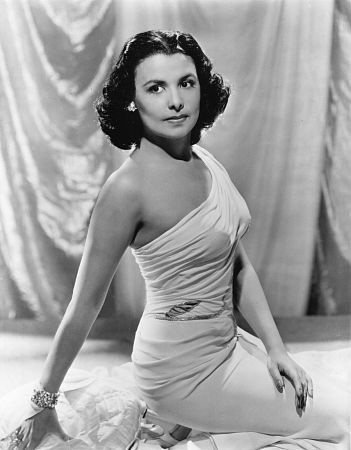
Lena Horne, one of the world's pre-eminent ladies of jazz, has died at 92. After a quick YouTube search, it's astounding to see her body of work. What a legacy.
She joined the chorus of the Cotton Club at the tender age of 16 and became a nightclub performer before moving to Hollywood, where she had small parts in numerous movies and more substantial parts in the films "Cabin in the Sky" and "Stormy Weather."
Sadly, due to the Red Scare and her left-leaning political views, she found herself blacklisted and unable to get work in Hollywood. As a result, she returned to her roots as a nightclub performer. She released several well received albums and announced her retirement in March 1980.
The next year, she starred in a one woman show, "Lena Horne: The Lady and Her Music," which ran for more than three hundred performances on Broadway, and earned her numerous awards and accolades, and she would continue recording and performing sporadically into the 1990s.
Harold C. Gregorian never invited recognition to rear its ugly head.
By trade he was a pencil pusher and worked the doldrums of the middle management ladder all the way up to Vice president of development for Hughes Research Laboratories in California. The event at The Continental was supposed to be special because his firm was celebrating their crowning achievment, the first working laser.
Gregorian was 61 and found that things changing all around him more and more. On the way over to the event, he heard newsman John Cameron Swayze on the radio talking about some bright young senator from Massachusetts named Kennedy. Earlier that day, the young WASP announced his candidacy for the Democratic presidential nomination and claimed he had big plans for the country. Gregorian thought, good luck...
It was a charming night filled with conversation. Gregorian and friends - which consisted mostly of military types - chatted mostly about the Antarctic Treaty which was basically some bullshit agreement that set aside Antarctica as a scientific preserve and banned military activity on that continent. They all joked it wouldn't be banned if their cuckoo boss needed the land for one of his cocamamie ideas. He'd just buy it. They all laughed. Around round of martinis.
Gregorian was starting to feel woozy and fixated on the banner above the podium. It read:
'Behold the LASER: Light Amplification by Stimulated Emission of Radiation.
The future is now... '
He scoffed as he chewed his olive. Probably because he knew that those were his words on that majestic-looking piece of cotton and silk. You see, Harold C. Gregorian claims that he coined the term 'laser' and truth be told, he very well could have.
But tell that to special guest Gordon Gould, who originally published the term in one of his many widely-read science journal essays. Gould, a consultant for Hughes Research, claims he came up with the acronym while on a flight to Indonesia.
Another martini.
Just before dinner, Harold C. Gregorian shifted in his seat in preparation for the keynote speaker. He watched his boss Howard Hughes address the crowd and marveled at how regal the billionaire still appeared to be, wacky rumors and all. It was then that Harold C. Gregorian had a severe moment of clarity.
He pondered the great men. Hughes. Gould. Even that young Massachusetts Senator. Harold C. Gregorian knew he could never be one of them. So he raised his glass and from his seat, gave perhaps one of the most eloquent retirement speeches that any of those grizzly army engineers have ever heard.
Within the month, Harold C. Gregorian sold his house, liquidated most of his assets and bought a remote mountain cabin in Big Bear.
No more martinis.
While Harold C. Gregorian might not have been a great man, one thing was for sure and he repeated it to himself every morning at the lake, "I'm a God Damned great fisherman..."
Until I get my #Fridayflash fiction in order, I'm dropping this hilarious lil' vid on everyone...
Both Bukowski and Marlon Brando were men's men. They both possessed pure genius and defined their generation within their work. Time capsule stuff.
I came across this precious, short video made by the San Francisco Children's Theater that overdubs a dramatic reading of Marlon Brando's famous monologue from "On the Waterfront" performed by kids.
So I ask...
Fresh off the heels of Pre-schoolers doing 'Scarface' from a few weeks ago, check out this new video. Does great dialogue sound the same when delivered by little kids?
Some scribes listen to music when they write. For me, it depends if the writing gods are kind, I can sort of let it flow and listen to some tunes.
If you're a fan of jazz, big band and swing, read on...
Don't know how-in-the-heck did it, but I managed to stumble upon this oldies station online -- WKHR 91.5, based out Bainbridge Township, Ohio and serving the greater Cleveland area.
This just isn't another oldies station, mind you. There's no doo-wop, girl groups or rock 'n roll here. No, we're talking big band, swing, blues, jump-blues and jive from the '20s through the '40s. Amazing.
When I first stumbled across it, it felt like I was in some sort of time warp and truthfully, I couldn't believe what I was hearing. Now even though you can hear this stuff uninterrupted on satellite radio, it was completely refreshing to hear voices after these grand swingin' tunes as if the jocks were slingin' pop tunes of the day.
I imagined myself myself sitting somewhere at a drugstore counter, sipping a vanilla Coke and eyeing up a cutie-pie waitress. ... Before heading back to the flophouse to write that is.
The station relies entirely on donations from listeners so please consider making a donation to keep WKHR on the air and commercial free
Even better, they're streaming. Click HERE to listen online. And please, donate if you enjoy them. Let's keep this music alive.
Wow ... Growing up I used to LOVE Popeye. LOVE him...
Even though Bukowski had a bitter hatred towards Mickey Mouse, I think it's safe to say that he probably would've dug the one-eyed sailor. He had an undeniable heroic nature. What's more, Popeye was a military man, a loner who talked to himself and was quite the scrapper (like Buk). Check out some Popeye flash I wrote HERE.)
So why do I dig Popeye? Dunno why exactly. Deep down, he seemed like a sweetheart of a guy. I remember many a morn getting up around 6 a.m. to catch him. In fact, I'll go as far as to say I ate green construction paper from time-to-time, pretending it was spinach. (But try to forget I just told you that.)
Anyway, check out this WWII-era B&W short of Popeye doing his thing for Uncle Sam. Whew. How we've come a long way in so many respects...
Caveat: The video is not to most PC stuff to watch - so apologies if it offends anyone.
Check it out after the jump as well as a few other very UN-PC vintage cartoons.
I think if I could be any type of scribe, it would be that of a screenwriter. While I love the notion of locking myself in a private hideaway and churn out The Great American Novel, I've always had an affinity for the craft. It also helps that I'm a huge movie and TV buff. Television, by the way, is churning out some of the best writing I've seen in years. "Treme," anyone?
I've dabbled in the form (check it out HERE), have been read by some agencies (bog whoop, I know) and in my younger days turned down an offer on one of my scripts from a small production outfit. Dumb mistake, I know, but that's another post.
I say screenwriting is a craft, because that's exactly what it is. The script is a blueprint for a film -- the guide for the actors, director et al. That said, I was more than stoked to see a recent article in Variety about a type of writer most people are unaware of: the rewrite scribe, that last-minute gun-for hire who gets none of the glory and a whole mess of dough. An added plus? The rewrite scribe gets NONE of the grief if the film tanks.
According to the piece, the most frequently tapped polishers haven't had official onscreen credits in years. Jim Uhls, who has only one screenplay credit since penning "Fight Club" more than a decade ago, works regularly as an uncredited gun-for-hire. Shane Black, who once earned the distinction as Hollywood's highest-paid screenwriter, also is high on many studio wish-lists for being a closer.
Not that I'm exactly a whore for the benjamins, but alot of A-list scribes like John August, Jamie Vanderbilt, Steve Zaillian, Scott Frank, Akiva Goldsman, Brian Helgeland, Eric Roth, Lowell Ganz and Babaloo Mandel, Paul Attanasio, Aaron Sorkin, Susannah Grant and Ron Bass are on many a studio speed dial and have been polishing many hits through the years.
Despite earning up to $60,000 a day, the piece says the gig isn't right for everyone.
As a lit manager remarks, "You don't see Diablo Cody doing polishes. Her voice is too original, and if she came in and punched up dialogue on someone else's script, it would probably sound out of place."
I don't live in San Marino, California but dammit, this just may be worth a trip to the Left Coast. It's been a while...
The Huntington Library exhibit "Charles Bukowski: Poet on the Edge," will feature corrected typescripts of Bukowski’s poems and such novels as his autobiographical work, "Ham on Rye" (1982), and his screenplay "Barfly," made into a film in 1987, starring Faye Dunaway and Mickey Rourke. There also will be early periodicals containing his poetry and rare special editions of his writings published by John Martin, proprietor of the Black Sparrow Press, as well as memorabilia and photographs of Hank... The exhibit is organized in cooperation with his widow Linda Lee Bukowski and will run Oct. 9 to Feb. 14, 2011. Linda loaned the library many of Buk's personal items to complement the already-extensive literary collection she donated to the library.
Another gem of the exhibit? Hardcore Bukowski enthusiasts will be able to view his annotated racing forms at the exhibit.
As it stands, it owns more than 2,700 Bukowski items, including more than 500 books, drafts of poems. Fewer than 100 of those items will be on display in the exhibit. That said, all of the items have all been available to scholars since last summer.
Ok, so for those living under a rock... Charles Bukowski, who died in 1994, was a pre-eminent voice in 20th-century American literature. In his poetry and prose, Buki used experience, emotion, and imagination, along with violent and sexual imagery, to capture life at its most raw and elemental -- and all with unflinching honesty. His voice was for the social outcasts, drunks, hookers, addicts, bums and petty criminals.
The library is located on the former estate of railroad mogul Henry Huntington in San Marino and is renowned for its rare books collection -- which also includes a Gutenberg Bible.
The Huntington Library is located at 1151 Oxford Road, San Marino, California.
Check out a couple special Buk videos where he reads his poetry after the jump.
The first time my dad gave me a crisp twenty dollar bill , I thought it might has well have been a million. That's how great it felt. I...
BUKOWSKI'S BASEMENT
Welcome to Bukowski's Basement and the blog of Anthony Venutolo. It's primarily a showcase for nuggets that can range from anywhere from Skid Row to the Savoy in the form of poems, flash fiction, noir or pop culture musings.
Feel free to pour some cheap hooch and settle in because this is a place to celebrate all things wondrous in the whiskey-soaked literary landscape of Chuck Buk, Jack Kerouac, Tom Waits and Raymond Carver.
To view my complete profile, click HERE and feel free to follow me from any of the links above.


.png)


 rtin had backed out by then and would eventually be replaced by Liza Minnelli.
 Walker, a murder on the 4th of July weekend in 1965 precipitated the arrest of all the street people in the area. In the crowded cell, a disheveled homeless old man began to talk to Walker, who had been arrested earlier for drunkenness. The man told various stories of his life, but the tone darkened after 'Mr Bojangles' recalled his dog who'd been run over. Someone then asked for something to lighten the mood, and the man obliged with a tap dance. Wow...




![Reblog this post [with Zemanta]](https://lh3.googleusercontent.com/blogger_img_proxy/AEn0k_vyBUw4d54smXXfJ-JB1ZpmBviWC0d9fRoDnqfqjWgDModIXOK-Fv62iwHS_gao3VXubTDjVfYJdqUnU3Vf0G14ExCdbhyWSI9IaMDue6l_h7hTBmGFKqACrMpdHKt2FPr1eRPNX7MB3-CPMDpXZL1h=s0-d)


